

New Jersey’s July 2026 E-Bike Rules and Teen Accidents: Who Pays if Your Child Is Hurt?
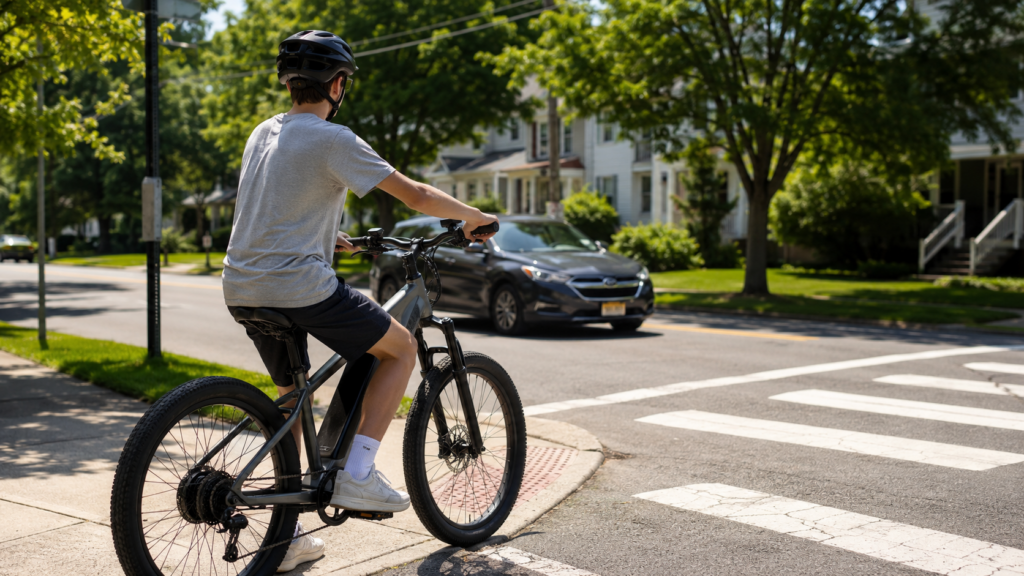
A call from your teenager after an e-bike crash can turn an ordinary New Jersey afternoon into a medical, legal, and insurance emergency. One moment, your child is riding to school, work, the boardwalk, a friend’s house, or through a busy local intersection. The next, you may be dealing with an ambulance, an emergency room, a police report, missed school, damaged equipment, and insurance questions you are not ready to answer.
For many parents, the worry does not end once a child receives medical care. It quickly turns into questions about fault, medical bills, insurance coverage, and what to do before important evidence disappears.
New Jersey’s new e-bike licensing and registration requirements take effect on July 19, 2026, and can make those questions more complicated. Depending on the date of the crash and the type of e-bike involved, the rules may affect licensing, registration, insurance, and how an injury claim is evaluated.
But the law does not automatically decide who pays after a teen e-bike accident. Responsibility depends on how the crash happened, who contributed to the harm, and which insurance policies apply. Depending on the facts, a driver, another rider, an e-bike company, a property owner, a business, or a public entity may need to be investigated.
This blog explains what New Jersey parents should know after a teen e-bike crash, including how the new rules can affect child injury claims, insurance questions, and the need for early investigation.
At Bramnick, Grabas, Arnold, Robotham, Trembly and Holtz, we know parents do not need vague answers after a serious crash. They need clear guidance, fast action, and a legal team prepared to investigate what happened while the facts are still fresh.
Why the Type of E-Bike Matters After a Teen Crash in New Jersey
The word “e-bike” is often used casually, but New Jersey law does not treat every e-bike the same way. Under New Jersey’s July 2026 e-bike rules, the type of bike involved may affect registration, licensing, insurance requirements, where the bike may be operated, and how an injury claim is evaluated.
A low-speed electric bicycle is generally a pedal-assisted bicycle with a motor that assists only while the rider is pedaling and stops assisting at 20 miles per hour. A motorized bicycle can include certain throttle-powered or higher-speed electric bicycles that do not fit the low-speed electric bicycle definition. More powerful electric devices may be treated differently under New Jersey law, which is why the exact bike should be identified early.
For parents, the practical questions include what kind of e-bike was involved and what rules applied to that vehicle.
Can Teens Legally Ride E-Bikes in New Jersey?
New Jersey’s new e-bike rules include age and licensing requirements that parents should understand. Under current MVC guidance for the July 2026 requirements, most operators must be at least 15 years old and possess either an e-bike license or a valid driver’s license. The MVC also identifies a limited exception for commercially rented low-speed electric bicycles, where the operator must be at least 16 years old and is not required to possess a driver’s license or e-bike license.
These details can become important after a teen e-bike accident. If a child was too young to ride, lacked a required license, was operating an unregistered e-bike after registration requirements applied, or was using a motorized bicycle without required insurance, those issues may be raised during the claim.
That does not mean parents should assume there is no case. A possible violation of an e-bike rule does not automatically eliminate an injury claim. New Jersey accident cases still depend on negligence, what caused the crash or injury, damages, available insurance, and whether more than one party shares responsibility.
For example, a driver who was speeding, failed to yield, drove distracted, or made an unsafe turn may still bear responsibility for a crash. The same may be true if a dangerous roadway condition, defective e-bike part, unsafe property condition, or another rider’s conduct contributed to the injury.
Who May Be Responsible After a Teen E-Bike Accident in New Jersey?
The answer depends on how the crash happened. In some cases, more than one person, company, or public entity may need to be investigated.
If a car, truck, bus, delivery vehicle, rideshare driver, or commercial vehicle hit your child, the driver’s conduct may be central to the accident claim. These cases often require a careful review of the police report, crash scene, traffic cameras, witness statements, vehicle damage, roadway layout, and available insurance.
If another e-bike rider may have caused or contributed to the crash, the analysis can be more complicated. An attorney may need to review the rider’s age, licensing status, e-bike classification, and possible insurance coverage.
If the e-bike malfunctioned, the manufacturer, seller, repair shop, or rental company may need to be investigated. Brake failures, throttle problems, battery issues, improper assembly, unsafe modifications, or defective parts may become important in determining how the crash occurred.
If the crash happened because of a dangerous property condition or roadway hazard, a business, property owner, municipality, county, school, or other public entity may need to be evaluated. Claims involving public entities can involve strict notice rules and shorter deadlines, which makes early legal guidance especially important.
The key is not to assume there is no claim just because your child was hurt in an e-bike crash. These cases can involve multiple layers of responsibility, and the full picture is not always clear in the first few days after a crash.
Does Insurance Cover Teen E-Bike Accident Injuries?
Insurance is one of the most confusing parts of teen e-bike accident claims.
Under the July 2026 e-bike requirements, New Jersey requires liability insurance for motorized bicycles. Low-speed electric bicycles do not require liability insurance, but they must be registered with the MVC. That distinction can matter after a crash because coverage may depend on the type of e-bike involved, the date of the accident, and whether another driver, property owner, business, public entity, or insurance policy may also be involved.
If your child was injured by or while riding a motorized bicycle, liability insurance may be part of the claim. If the crash involved a low-speed electric bicycle, there may not be a specific e-bike liability policy. Other coverage may still need to be reviewed, including auto insurance, homeowners insurance, renters insurance, umbrella coverage, business insurance, or a commercial vehicle policy.
Families should also be cautious about assuming that personal injury protection, known as PIP, automatically covers every e-bike injury. Coverage should be reviewed based on the accident date, policy language, household coverage, the type of vehicle involved, and whether another motor vehicle or insurance policy may be part of the claim.
Insurance companies may dispute fault, question the rider’s conduct, or take a narrow view of what a policy covers. Before accepting an insurer’s explanation, parents should understand what coverage may exist and whether another person, company, or public entity may also be responsible.
What if Your Teen Was Not Wearing a Helmet?
New Jersey law requires bicycle riders under 17 to wear a properly fitted and fastened helmet, and helmet requirements may also depend on how the e-bike is classified. Helmet use may become an issue after a teen e-bike crash, especially if the injuries include a concussion, head injury, skull fracture, facial trauma, or traumatic brain injury.
Not wearing a helmet does not automatically eliminate an injury claim. It may become part of an insurance company’s argument, and it may be relevant to certain injury issues, but liability still depends on the facts.
If a negligent driver hit your child, a vehicle failed to yield, the e-bike malfunctioned, or a dangerous condition contributed to the crash, those facts still matter. The focus should be on building a complete picture of what happened, not allowing the case to be reduced to one detail.
What Parents Should Do After a Teen E-Bike Crash
After a serious crash, parents are often dealing with emergency rooms, school absences, missed work, follow-up appointments, pain, fear, and uncertainty. At the same time, evidence can disappear quickly.
If your child was hurt in an e-bike accident, preserve as much information as possible. Seek medical care immediately and follow up with recommended treatment. Save the e-bike and do not repair, sell, modify, or discard it. Take photos of the bike, the scene, the injuries, the roadway, traffic signals, signs, skid marks, damaged vehicles or property, and the location of any nearby cameras. Get the police report if law enforcement responded. Write down witness names and contact information. Keep all medical bills, discharge papers, imaging results, prescriptions, and insurance correspondence.
If another vehicle was involved, get the driver’s insurance information. If the e-bike was rented, borrowed, purchased recently, repaired recently, or modified, preserve all related records. If the crash involved a public road, school area, municipal property, or government-owned location, speak with an attorney quickly because special deadlines may apply.
The goal is to protect your child’s health, preserve evidence, and avoid making statements or decisions before your family understands its rights.
Why Early Legal Action Matters After a Teen E-Bike Accident
Teen e-bike accident claims can become complicated quickly. They can involve overlapping questions about traffic rules, insurance coverage, comparative fault, product liability, public entity claims, and injuries that are not fully understood in the first few days after the crash.
At Bramnick, Grabas, Arnold, Robotham, Trembly and Holtz, we have represented injured people throughout New Jersey for decades. We understand how quickly an accident can affect a family’s medical care, income, transportation, school schedule, and sense of security. We also know that insurance companies may dispute fault, coverage, and the seriousness of an injury.
When we review a teen e-bike accident, we move quickly to investigate what happened, preserve key evidence, identify possible insurance coverage, and evaluate who may be legally responsible.
Our job is to protect your family’s rights and prepare the claim with the seriousness it deserves.
Protect Your Child’s Rights After a New Jersey E-Bike Accident
If your child was hurt in an e-bike crash, you do not have to sort through liability, insurance, and changing New Jersey e-bike rules alone. When your family is facing medical bills, missed school, insurance questions, and uncertainty about what happened, early legal guidance can help you understand what steps to take next.
At Bramnick, Grabas, Arnold, Robotham, Trembly and Holtz, we represent injured people and families throughout New Jersey from our offices in Scotch Plains, Clifton, Cherry Hill, and Newark. Whether your child’s crash happened close to home, near school, at the Shore, or on a busy local road, our team can review the situation, explain the issues that may affect your child’s claim, and help you move forward with clearer direction.
We offer free consultations, and our team is available 24/7 to discuss serious injury matters. Contact Bramnick Law today to discuss what happened and learn what steps may help protect your child’s rights.
Disclaimer: The articles on this blog are for informative purposes only and are no substitute for legal advice or an attorney-client relationship. If you are seeking legal advice, please contact our law firm directly.